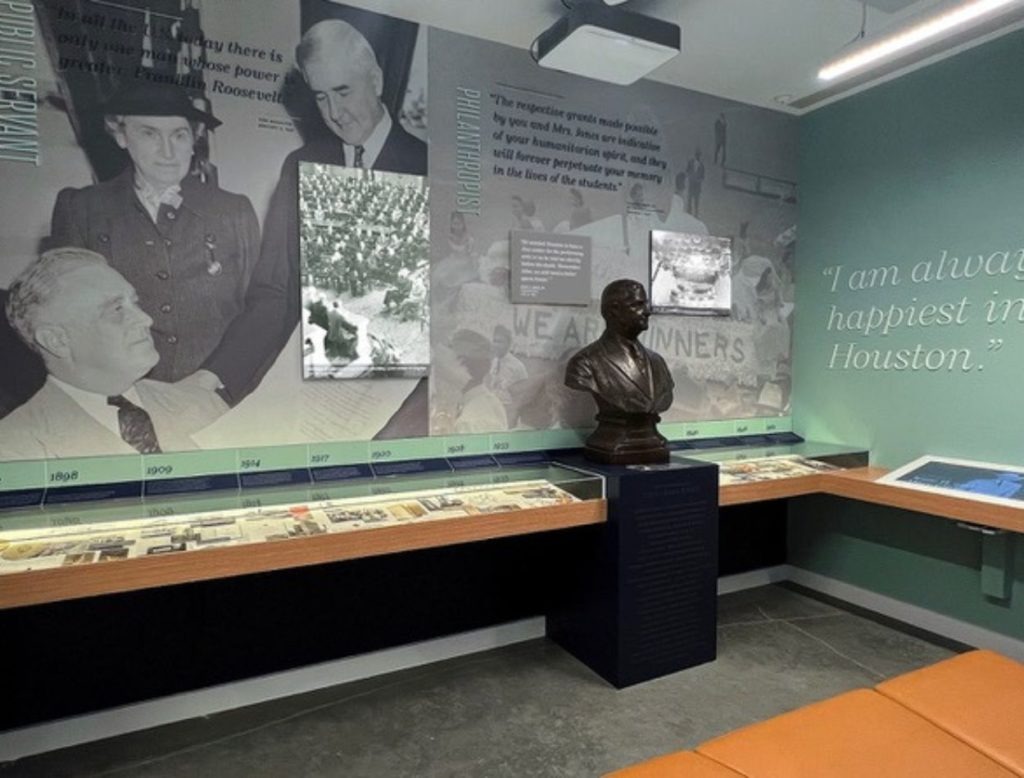
EXPLORE the Legacy Room at Houston Endowment, the philanthropic foundation established by Jesse H. and Mary Gibbs Jones in 1937 to expand access to opportunity for the people of greater Houston. The exhibition celebrates the Joneses through a timeline with corresponding artifacts; six screens with rotating images on walls covered in iconic photographic murals; and a touchscreen that displays historic images and information. The room shows how the Joneses’ contributions improved life for the people of Houston and how Mr. Jones helped save nations during both world wars and the Great Depression.
The interactive exhibition at Houston Endowment tells the remarkable story of the foundation’s benefactors Jesse H. and Mary Gibbs Jones.
The interactive exhibition at Houston Endowment tells the remarkable story of the foundation’s benefactors Jesse H. and Mary Gibbs Jones.
Legacy Room
Houston Endowment
EXPLORE the Legacy Room at Houston Endowment, the philanthropic foundation established by Jesse H. and Mary Gibbs Jones in 1937 to expand access to opportunity for the people of greater Houston. The exhibition celebrates the Joneses through a timeline with corresponding artifacts; six screens with rotating images on walls covered in iconic photographic murals; and a touchscreen that displays historic images and information. The room shows how the Joneses’ contributions improved life for the people of Houston and how Mr. Jones helped save nations during both world wars and the Great Depression.
Chase Building Celebrates
75th Anniversary
Houston Chronicle
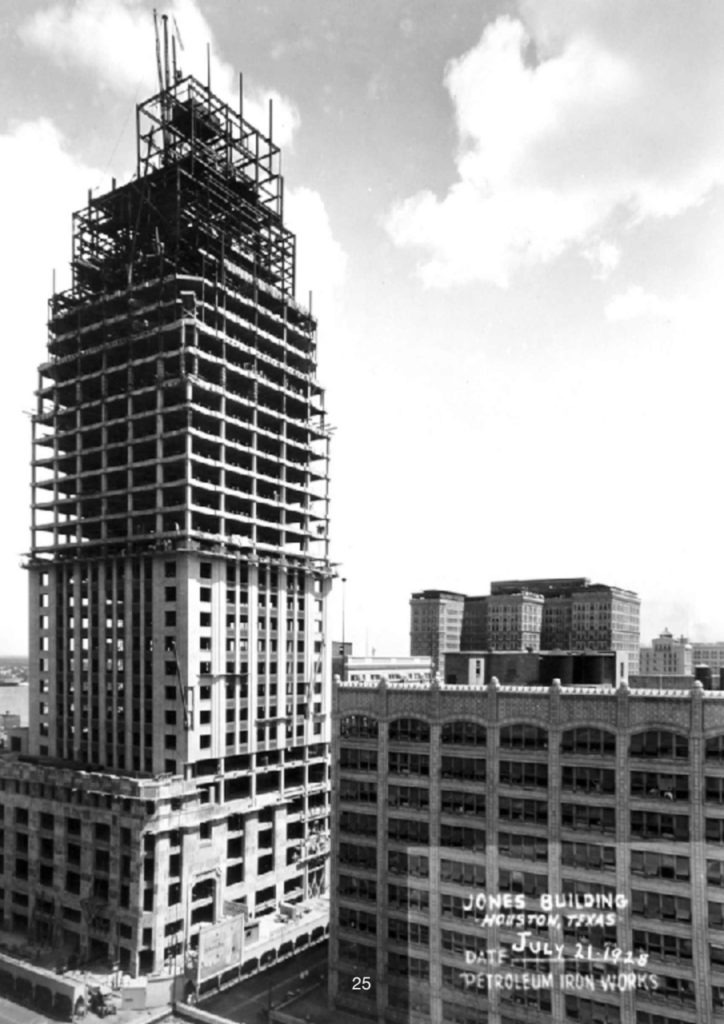
READ how the 1929 Art Deco Gulf Building remained Houston’s tallest skyscraper until the forty-four floor Humble Oil Company Building opened in 1963. A commemorative book celebrating the opening of the building proclaimed, “The Gulf Building is more than an office structure. … It is, in intent and fact, a monument. A towering pillar of inspired architecture which expresses the true importance of the new south.”
Jesse Jones’s 1929 Gulf Building (now the JP Morgan Chase Building) remained Houston’s tallest skyscraper until the 44-story Humble Oil Company Building opened in 1963. Jones’s Bankers Mortgage Company building is to the right of the Gulf Building; the top of his Rice Hotel is on the far right; and Jones’s National Bank of Commerce Building is in the bottom right corner. (Photo - Woodson Research Center).
Jesse Jones’s 1929 Gulf Building (now the JP Morgan Chase Building) remained Houston’s tallest skyscraper until the 44-story Humble Oil Company Building opened in 1963. Jones’s Bankers Mortgage Company building is to the right of the Gulf Building; the top of his Rice Hotel is on the far right; and Jones’s National Bank of Commerce Building is in the bottom right corner. (Photo - Woodson Research Center).
Chase Building Celebrates
75th Anniversary
Houston Chronicle
READ how the 1929 Art Deco Gulf Building remained Houston’s tallest skyscraper until the forty-four floor Humble Oil Company Building opened in 1963. A commemorative book celebrating the opening of the building proclaimed, “The Gulf Building is more than an office structure. … It is, in intent and fact, a monument. A towering pillar of inspired architecture which expresses the true importance of the new south.”
INTERVIEWS
Filming the Fight: An Interview with L. Bennett Fenberg
Houston History Magazine
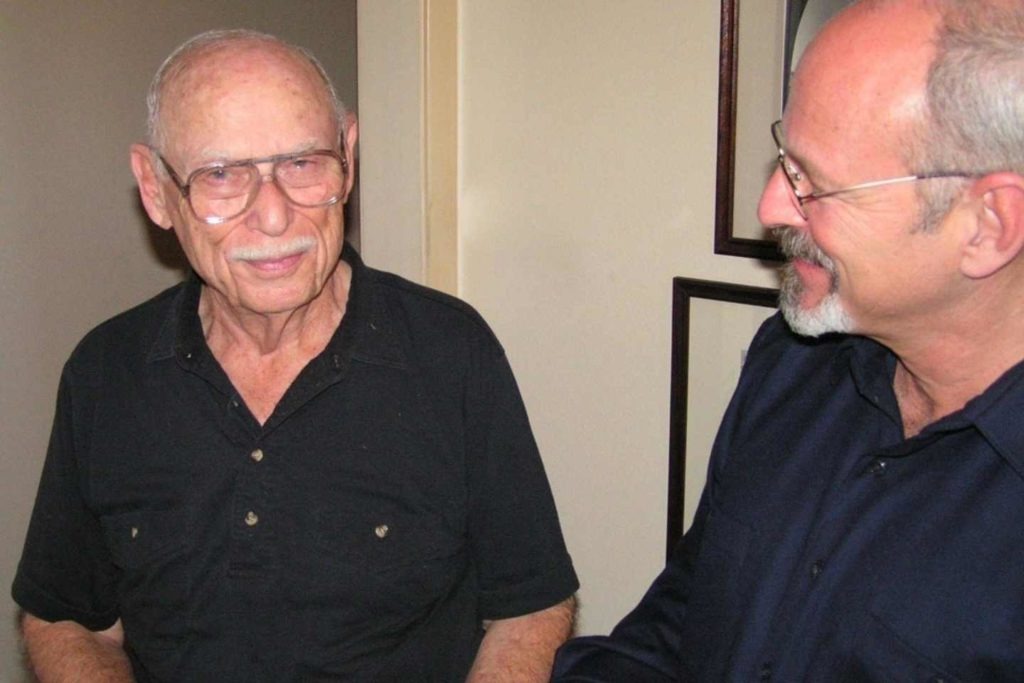
READ how World War II photographer L. Bennett Fenberg filmed the iconic explosion of the swastika above Germany’s Nuremberg Stadium. The film has been used in countless newsreels and movies, including Judgment at Nuremberg directed by Stanley Kramer and starring Spencer Tracy, Marlene Dietrich, Burt Lancaster, Montgomery Clift and others. Fenberg recounts the challenges he and his fellow Signal Corps photographers encountered on European battlefields. Fenberg also describes how his family settled in Houston after the war. WATCH the original film by L. Bennett Fenberg of the swastika explosion.
L. Bennett Fenberg with his nephew and interviewer Steven Fenberg.
L. Bennett Fenberg with his nephew and interviewer Steven Fenberg.
Filming the Fight: An Interview with L. Bennett Fenberg
Houston History Magazine
READ how World War II photographer L. Bennett Fenberg filmed the iconic explosion of the swastika above Germany’s Nuremberg Stadium. The film has been used in countless newsreels and movies, including Judgment at Nuremberg directed by Stanley Kramer and starring Spencer Tracy, Marlene Dietrich, Burt Lancaster, Montgomery Clift and others. Fenberg recounts the challenges he and his fellow Signal Corps photographers encountered on European battlefields. Fenberg also describes how his family settled in Houston after the war. WATCH the original film by L. Bennett Fenberg of the swastika explosion.
Jesse Jones: A Conversation About ''Mr. Houston''
Houston History Magazine
READ an interview with former University of Houston history professor and department chair Joseph Pratt about Jesse Jones’s influence on Houston and the nation.
Downtown Houston Main Street in the 1930s with Jesse Jones’s Lamar Hotel, Metropolitan and Loew’s State Theaters and the top of his Gulf Building on the left and his Kirby Theater and Building on the right.
Downtown Houston Main Street in the 1930s with Jesse Jones’s Lamar Hotel, Metropolitan and Loew’s State Theaters and the top of his Gulf Building on the left and his Kirby Theater and Building on the right.
Jesse Jones: A Conversation About ''Mr. Houston''
Houston History Magazine
READ an interview with former University of Houston history professor and department chair Joseph Pratt about Jesse Jones’s influence on Houston and the nation.
Jesse Jones and The Making of Houston
Texas Observer
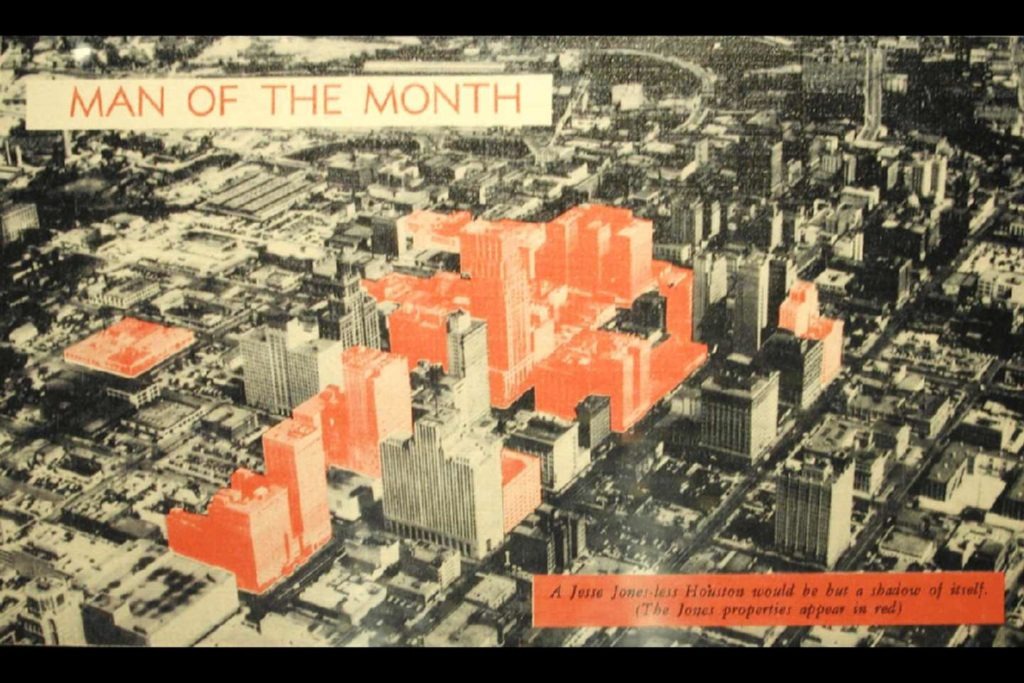
READ a conversation with writer Cecily Sailer about Jesse Jones’s profound impact on the development of Houston, Texas.
Downtown Houston with Jesse Jones’s buildings in red.
Downtown Houston with Jesse Jones’s buildings in red.
Jesse Jones and The Making of Houston
Texas Observer
READ a conversation with writer Cecily Sailer about Jesse Jones’s profound impact on the development of Houston, Texas.
PRESENTATIONS
Jesse Jones: Houston’s Enduring Legacy
Preservation Houston
WATCH Steven Fenberg with rare photographs show how Jesse Jones—Houston’s preeminent developer during the first half of the 20th century—built the city’s first skyscrapers, raised half of the funds to develop the Port of Houston, owned the town’s largest bank and newspaper and during the Great Depression and World War II became the most powerful person in the nation next to President Franklin Roosevelt.
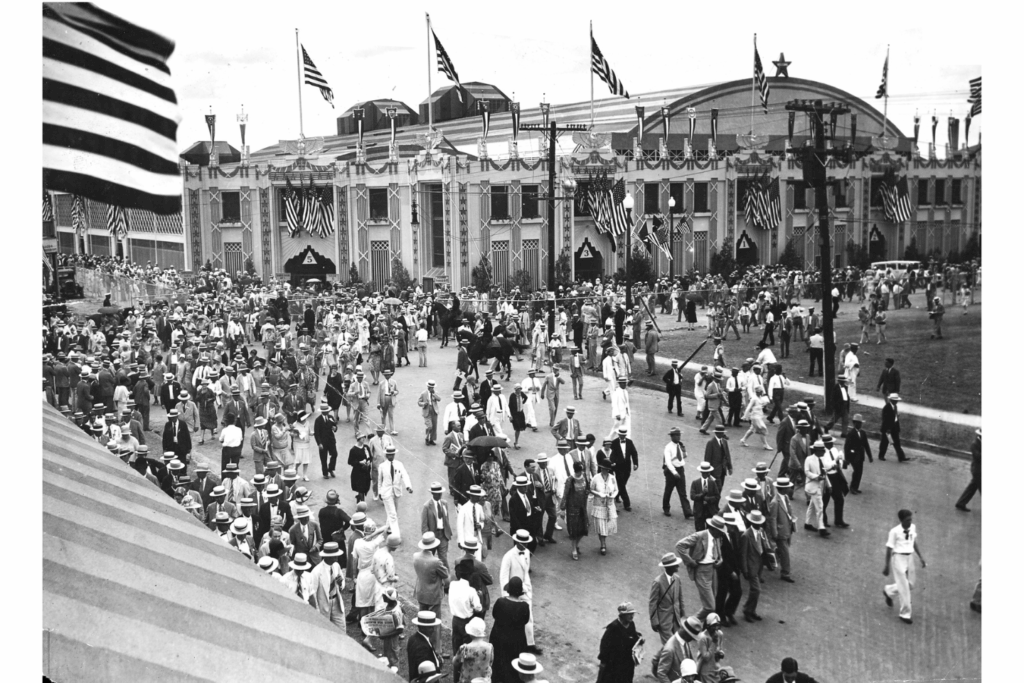
As finance chair of the Democratic National Committee, Jesse Jones captured the 1928 convention for Houston, the first national convention held in the South since the Civil War. The convention put Houston on the map and Jesse Jones in the spotlight.
As finance chair of the Democratic National Committee, Jesse Jones captured the 1928 convention for Houston, the first national convention held in the South since the Civil War. The convention put Houston on the map and Jesse Jones in the spotlight.
Jesse Jones: Houston’s Enduring Legacy
Preservation Houston
WATCH Steven Fenberg with rare photographs show how Jesse Jones—Houston’s preeminent developer during the first half of the 20th century—built the city’s first skyscrapers, raised half of the funds to develop the Port of Houston, owned the town’s largest bank and newspaper and during the Great Depression and World War II became the most powerful person in the nation next to President Franklin Roosevelt.
ARCHIVES
Archive of Jesse Jones Set To Open At Rice University
Rice University/Houston Public Media
LISTEN to how Steven Fenberg and architectural historian and author Barrie Scardino assembled the enormous collection of Jesse Jones’s business and personal papers and hundreds of rare photographs, which were donated by Houston Endowment to Rice University’s Woodson Research Center at the Fondren Library. Fenberg describes how the collection offers a comprehensive and unique look into Houston’s early business history. A collection of Fenberg’s papers are also available at the Woodson Research Center.
Susan Vaughn Clayton and Mary Gibbs Jones sell war bonds to their husbands, Jesse Jones and Will Clayton (left), who helped initiate and implement the Marshall Plan. Photo courtesy of Rice University's Woodson Research Center.
Captain Eddie Rickenbacker, Eastern Airlines president and a celebrated World War I pilot, shakes hands with Orville Wright at the 1943 dinner arranged by Jesse Jones to honor the fortieth anniversary of the first Wright Brothers' flight, and to announce the return of the Kitty Hawk from England. Courtesy AP/Wide World.
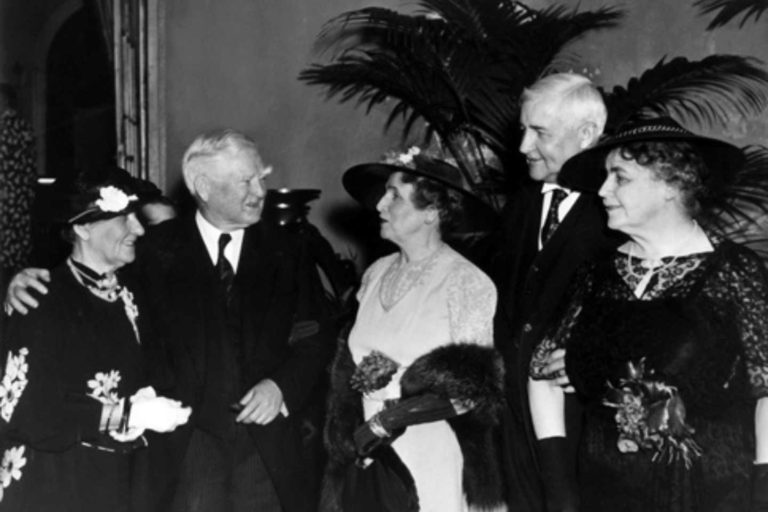
(left to right) Mariette Garner, Vice President John Nance Garner, the Joneses, and Edith Wilson celebrate Jesse Jones's sixty-third birthday. Photo courtesy of Rice University's Woodson Research Center.
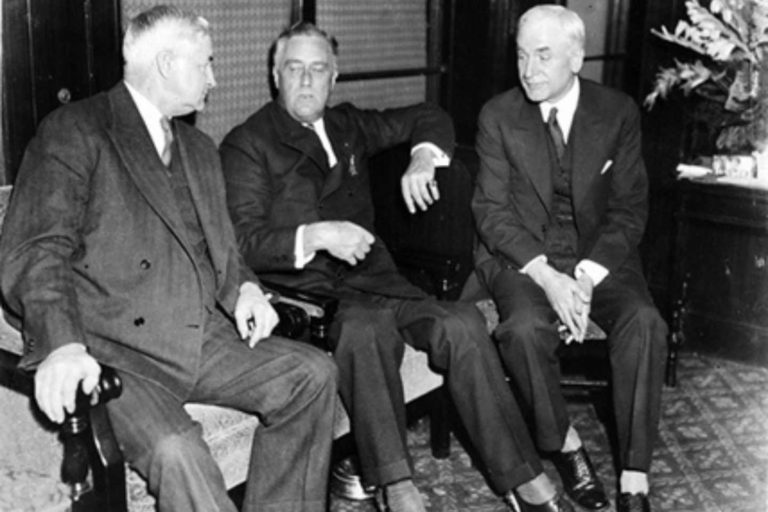
Jesse Jones, President-elect Franklin Roosevelt and then Senator Cordell Hull of Tennessee. In a rare instance, Roosevelt's leg braces are visible in the picture. Courtesy of CORBIS.
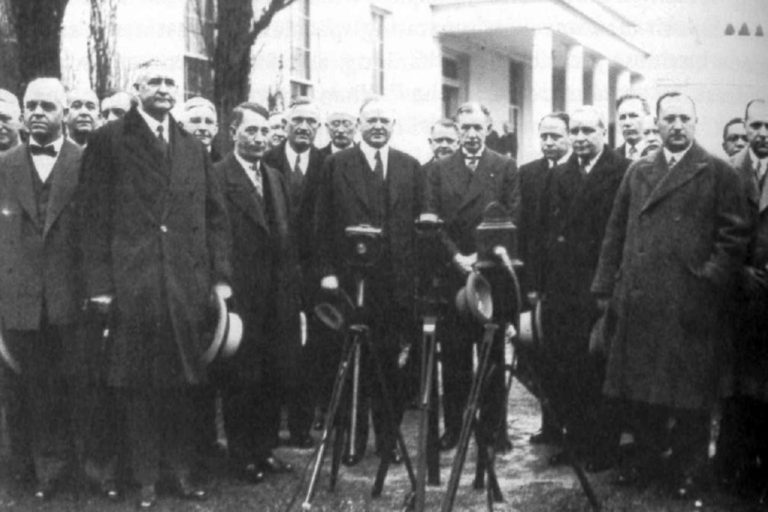
Jesse Jones (front row, second from left) and President Herbert Hoover (center), 1932. Courtesy Library of Congress.
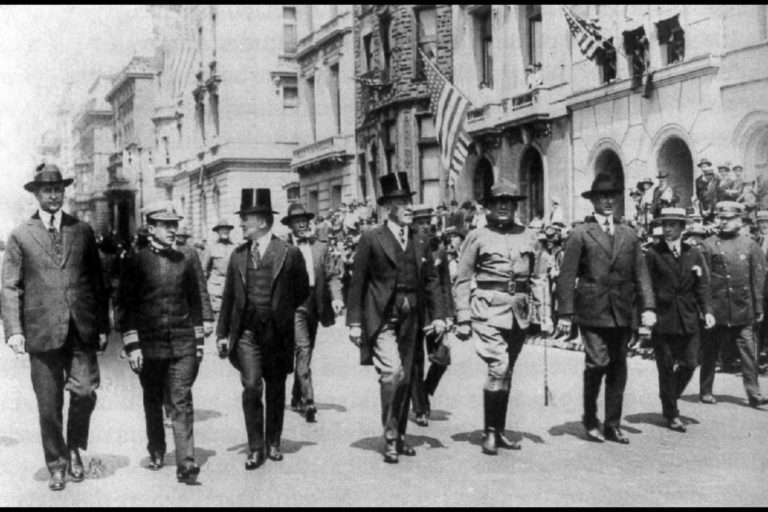
(left to right) Jesse Jones, Admiral Cary T. Grayson, Joseph Tumulty, and President Woodrow Wilson marching down Fifth Avenue during the immense American Red Cross fundrasing on May 18, 1918. Courtesy Campbell Photo Services.
(left to right) Senator Edwin C. Johnson of Colorado, Jesse Jones, and Senator Lyndon B. Johnson of Texas. Courtesy Houston Chronicle.
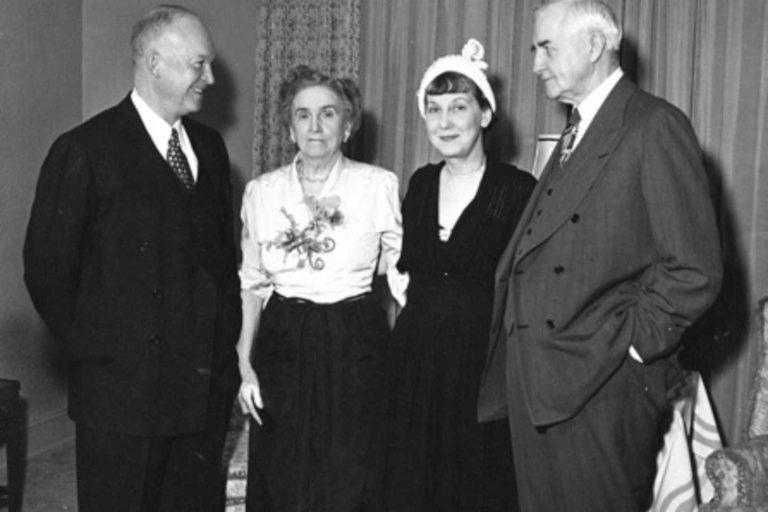
President Dwight Eisenhower, Mary Gibbs Jones, Mamie Eisenhower and Jesse Jones. Photo courtesy of Rice University's Woodson Research Center.
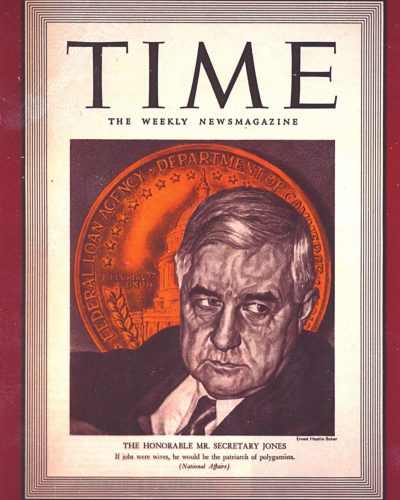
Jesse Jones was featured in major magazine cover stories throughout his public career. This was his second appearance on the cover of TIME magazine, which proclaimed in its 1941 article, “In all the US today there is only one man whose power is greater: Franklin Roosevelt.”
Jesse Jones was featured in major magazine cover stories throughout his public career. This was his second appearance on the cover of TIME magazine, which proclaimed in its 1941 article, “In all the US today there is only one man whose power is greater: Franklin Roosevelt.”
Archive of Jesse Jones Set To Open At Rice University
Rice University/Houston Public Media
LISTEN to how Steven Fenberg and architectural historian and author Barrie Scardino assembled the enormous collection of Jesse Jones’s business and personal papers and hundreds of rare photographs, which were donated by Houston Endowment to Rice University’s Woodson Research Center at the Fondren Library. Fenberg describes how the collection offers a comprehensive and unique look into Houston’s early business history. A collection of Fenberg’s papers are also available at the Woodson Research Center.
Susan Vaughn Clayton and Mary Gibbs Jones sell war bonds to their husbands, Jesse Jones and Will Clayton (left), who helped initiate and implement the Marshall Plan. Photo courtesy of Rice University's Woodson Research Center.
Captain Eddie Rickenbacker, Eastern Airlines president and a celebrated World War I pilot, shakes hands with Orville Wright at the 1943 dinner arranged by Jesse Jones to honor the fortieth anniversary of the first Wright Brothers' flight, and to announce the return of the Kitty Hawk from England. Courtesy AP/Wide World.
(left to right) Mariette Garner, Vice President John Nance Garner, the Joneses, and Edith Wilson celebrate Jesse Jones's sixty-third birthday. Photo courtesy of Rice University's Woodson Research Center.
Jesse Jones, President-elect Franklin Roosevelt and then Senator Cordell Hull of Tennessee. In a rare instance, Roosevelt's leg braces are visible in the picture. Courtesy of CORBIS.
Jesse Jones (front row, second from left) and President Herbert Hoover (center), 1932. Courtesy Library of Congress.
(left to right) Jesse Jones, Admiral Cary T. Grayson, Joseph Tumulty, and President Woodrow Wilson marching down Fifth Avenue during the immense American Red Cross fundrasing on May 18, 1918. Courtesy Campbell Photo Services.
(left to right) Senator Edwin C. Johnson of Colorado, Jesse Jones, and Senator Lyndon B. Johnson of Texas. Courtesy Houston Chronicle.
President Dwight Eisenhower, Mary Gibbs Jones, Mamie Eisenhower and Jesse Jones. Photo courtesy of Rice University's Woodson Research Center.